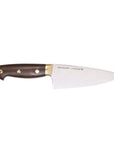
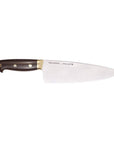
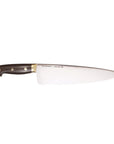
KRAMER by ZWILLING 2.0 Carbon Steel Chef’s Knife
German Engineering Enhanced by Japanese Master Craftsmanship
Unlock true chef-level performance with the KRAMER by ZWILLING 2.0 Carbon Steel Chef’s Knife, designed by world-renowned Master Bladesmith Bob Kramer. This powerhouse knife handles all your chopping, slicing, dicing, and mincing with precision—making it the ultimate everyday workhorse for serious cooks. 🍅🥩🌿
Featuring a wide, balanced blade, this chef’s knife offers excellent knuckle clearance and stability. Its shape is ideal for larger hands, yet still agile enough for smaller hands to maneuver comfortably. The result? Clean, controlled cuts whether you’re working through herbs, vegetables, or thick cuts of meat.
Forged from premium 52100 carbon steel, the blade delivers unbeatable strength, long-lasting sharpness, and the ultra-fine edge retention demanded by today’s professional kitchens. Carbon steel is celebrated for its razor-sharp, responsive performance—perfect for cooks who want the highest level of precision. 🖤
Available in 6", 8", and 10" sizes. Hand wash recommended.
Handmade in Japan. Lifetime Warranty.
Why This Chef’s Knife Stands Out ❤️
-
🔪 Ideal for chopping, slicing, dicing & mincing
-
🥇 Forged from 52100 carbon steel for incredible sharpness
-
⚔️ Exceptional edge retention for long-lasting performance
-
✋ Wide blade provides comfort and control for all hand sizes
-
🌿 A versatile, do-it-all knife for every kitchen
-
Handcrafted in Japan with superior craftsmanship
-
🛡️ Backed by a lifetime warranty
| Name: |
KRAMER by ZWILLING 2.0 Carbon Steel Chef's Knife |
| UPC: |
035886545406 |
| Manufacturer: |
Bob Kramer |
Care of Knives
A good knife is an investment. With proper care, it will last a lifetime.
All Zwilling J.A. Henckels and the Miyabi Red Marimoto Edition knife are dishwasher safe. However, we do not recommend putting knives in the dishwasher. Banging against other cutlery or pots and pans could chip the edge. High heat and detergent can discolor and damage the handle. Instead, wipe the knife clean in your sink with a wet cloth of soft sponge with dish soap. Dry immediately. Other Miyabi and all Kramer by Zwilling knives need to be hand washed (see instructions below)
No metal is completely "stainless." Do not allow acidic foods (lemon, mustard, tomato, etc) to remain on the blade after use. This may cause tarnishing. Should the blade show signs of staining, use a non abrasive metal polish for cleaning. Carbon steel knives develop a patina over time, causing the steel will turn dark gray or black. To minimize discoloring, immediately after cutting highly acidic food, rinse, wipe the blade, and then return to cutting. Always rinse and dry carbon steel blades immediately after use.
Removing Rust Spot - If rust spots form on a carbon steel blade, they can be easily removed with an abrasive bench stone also called a "Rust Eraser" following these steps
1. Wet Rust with water 2. Rub spot with light pressure in one direction parallel to the blade's pattern. 3. Wipe the blade clean and dry with a paper towel.
Do not use tough bone with knives (except meat cleavers). Do not use knives for poking, prying, separating, or cutting semi-frozen or frozen foods. Do not use knives as screwdrivers or can openers. This is not their designated purpose and may result in bending or breaking the blade or edge of the knife. Zwilling J.A. Henckel warranty does not cover misuse.
Proper Knife Storage
Knives have to be stored in a safe place to protect the cutting edge and guarding against injuries. There are some options for storing your knives. Magnetic knife bars are convenient and safe for chefs who want to be able to view their blades and easily access then. They attach to the wall and firmly hold knives in place. A wooden knife block is the best way to store knives on the counter. The size of the block varies with the number of knives to be store. Most Zwilling J.A. Henckels blocks also have a slot for a honing steel and kitchen shears.
Cutting Surfaces
Cutting Surfaces should be smooth, easy to clean and "give" on contact with knife cuts. Zwilling J.A. Henckles recommends: wooden or bamboo cutting boards and quality polyethylene boards. Avoid surfaces that can dull or damage the knife such as china, marble, granite, tile, Formica, porcelain, stainless counter tops and glass. Remember, all cutting boards and surfaces should be cleaned thoroughly immediately after use to avoid harmful bacteria growth.