JL Hufford ...discover gourmet.
Contact JL Hufford at 877-554-8336
Live chat by BoldChat

McAfee Secure sites help keep you safe from identity theft, credit card fraud, spyware, spam, viruses and online scams

Discover gourmet products at JL Hufford Find gourmet products by brand, category or price range.
   HOME  |  LOGIN  |  SHOPPING CART
Receive discounts and
promotions via email.
Get Discounts & Special Promotions on Gourmet Products from JL Hufford
Shop by Category
Kitchen Electrics
  Blenders / Mixers
Toasters and Ovens
Kitchen Tools
  Cookware
Culinary Torch
Thermometers
Wine Accessories
Coffee & Tea Equipment
  Coffee Grinders
Coffee Makers
Espresso Machines
Tea Kettles
    See More...
Drinkware
  Coffee Mugs
Glassware
Travel Mugs
Gourmet Beverages
  Chai Tea
Coffee
Frozen Drinks
Tea
    See More...
Gourmet Foods
  Baking Mixes
Gourmet Gifts
JL Hufford Exclusives
  Build-Your-Own Coffees
JL Hufford Rewards
Gourmet Geeks
SuperautomatikaŽ Blend
Premium Brands
  Ascaso
Baratza
Big Train
Blendtec
Bodum
Bonjour
DeLonghi
Dualit
Illy
Jura Capresso
La Pavoni
Lang
Lavazza
Nuova Simonelli
Pasquini
Rancilio
Republic of Tea
Saeco
Simplex
Vita-Mix
    See More...
The Gourmet Outlet
  Certified Pre-Brewed
Open Box Deals
  and much more...
 
Free Shipping and No Tax on orders over $75
Check the Coffees of the Month! Great gourmet coffees at low prices.
Check our Espresso Machine Discounts & Promotions in The Gourmet Outlet

The Vacuum Brewing Method

Okay, I like to try new things, but this? I mean, this concept is nothing new, and it seems like a giant leap backwards. Where's the electronic gizmo and gadgetry? And what's so good about brewing downside up rather than up side down? It appears at first blush that this is a big waste of my time. But this functional piece of art is becoming such the fad, that I figured there had to be more to it. So, I dove in. And I'm glad i did! First, then let me explain how it works. Heat.
The heat source for a vacuum brewer is either electrical, stovetop, or flame (or electric range). 

Construction:

A globe sits on the heat source and attaches to another globe via a tube. A filter (normally reusable) sits in or on the top globe's bottom opening. Each model includes a handle which is in some fashion connected to the bottom globe, some include a heating pad (or strategically placed candle), while others also include a structure which holds the top globe after it is removed. Pressure.
As the water-filled bottom globe heats up (depending on size, about five minutes), steam forms, and the pressure from the expanding air pushes steam through the tube into the top globe, where slightly coarse to drip grind coffee sits on a filter.

Vacuum:

Once the heat source is removed from the bottom globe, the air contracts back, and a vacuum is formed. This vacuum in the bottom globe forces the water (now coffee) from the top globe back into the bottom globe.


Fini:

And that's it. Many units come with a lid for the top of the bottom globe. Caution: contents hot!


Ads/Disads:

The disadvantages are, I think, plain to see. First, using this device, while not terribly difficult, has a precarious place on the learning curve. The globes are often difficult to handle, and finding a place to put the top globe with a tube protruding from its bottom isn't convenient. There are no thermal options here! That's not such a problem for some folks, and true connoisseurs won't have their coffee sit for hours. Another issue with the original rustic pots is that they are not for the on-the-go crowd; there is no timer. A timed-on is standard with even super-store brand coffee makers. Finally, many of these units that are priced under $100.00 do not have a very good vacuum system. So, a little water may still remain at the bottom of the bottom globe immediately after the heating element shuts off and the coffee starts streaming back in; the consequence can be noticeably weak coffee.
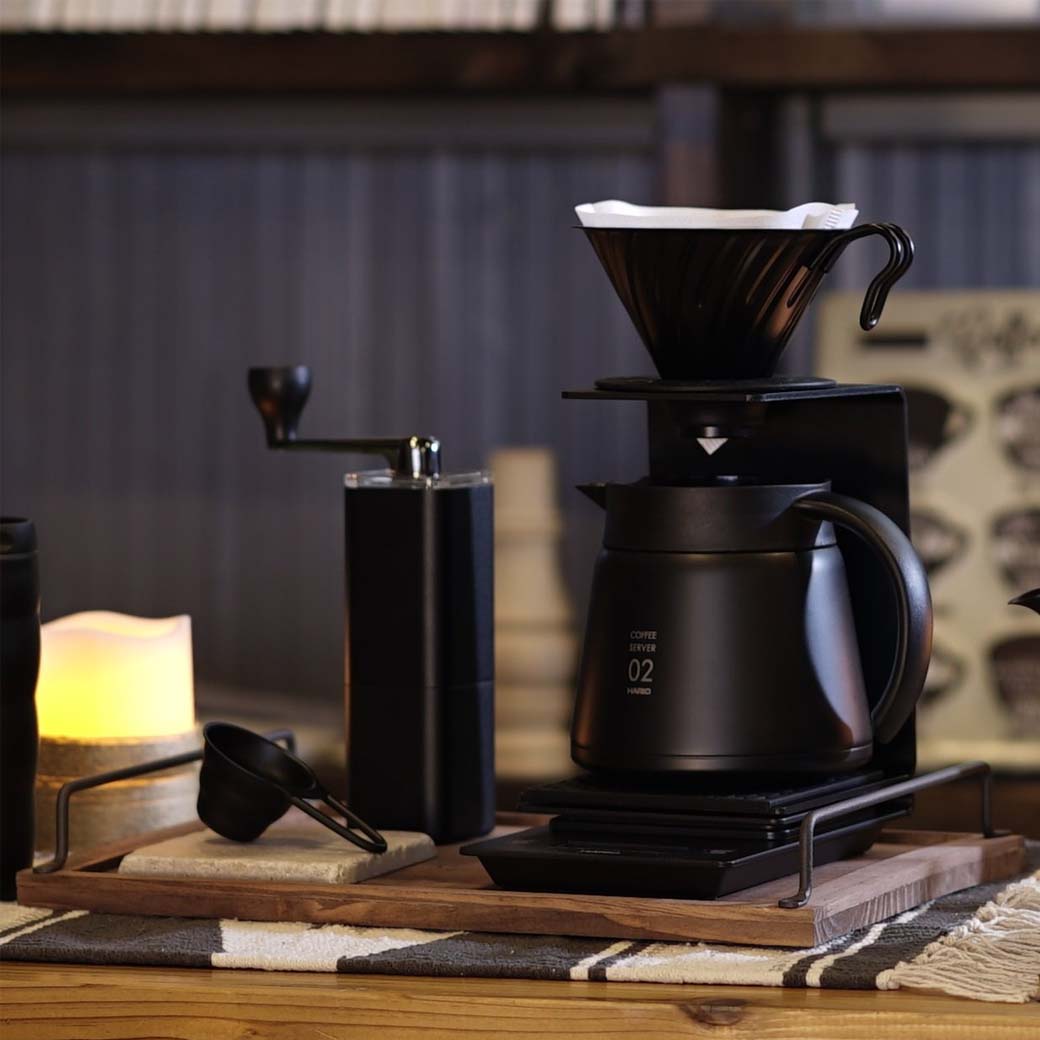
The advantages are just as numerous. First, the unit is a functional bit of art, and aesthetic appeal goes a long way in the world of over-processed plastic material goods. Second, none of the water comes into contact with metal parts, which means that taste alteration by steel, brass, or any other metallic substance is not an issue. Also, with good vacuum units, the taste can be quite exquisite. Bitterness is a non-issue and maximal oil extraction occurs in every brew. You don't run the risk of briny or tart coffee that can be a problem with some cheaper electronic models. Finally, there are now electric models available which adds significant convenience.

Overall, it turns out that I like this hour glass of a coffee maker. If I had to choose between a top of the line vacuum brewer and a top of the line French press, I'd take the vacuum brewer, because I'd rather the flawless laws of nature get my cup just right than my clumsy hands and internal clock.