JL Hufford ...discover gourmet.
Contact JL Hufford at 877-554-8336
Live chat by BoldChat

McAfee Secure sites help keep you safe from identity theft, credit card fraud, spyware, spam, viruses and online scams

Discover gourmet products at JL Hufford Find gourmet products by brand, category or price range.
   HOME  |  LOGIN  |  SHOPPING CART
Receive discounts and
promotions via email.
Get Discounts & Special Promotions on Gourmet Products from JL Hufford
Shop by Category
Kitchen Electrics
  Blenders / Mixers
Toasters and Ovens
Kitchen Tools
  Cooking Utensils
Cookware
Culinary Torches
Cutlery
Wine Accessories
    See More...
Coffee & Tea Equipment
  Coffee Grinders
Coffee Makers
Espresso Machines
Tea Kettles
    See More...
Drinkware
  Coffee Mugs
Espresso Cups
Glassware
Travel Mugs
Gourmet Beverages
  Chai Tea
Coffee
Hot Cocoa
Ice Coffee
Tea
    See More...
Gourmet Foods
  Baking Mixes
Candies
Cheeseball Mixes
Dip Mixes
Jams & Spreads
Soup Mixes
Gourmet Gifts
  Cider Gift Packs
Cocoa Gift Packs
Coffee Gift Packs
Tea Gift Packs
JL Hufford Exclusives
  Build-Your-Own Coffees
JL Hufford Rewards
Gourmet Geeks
SuperautomatikaŽ Blend
Premium Brands
  Ascaso
Aspen Mulling
Baratza
Big Train
Blendtec
Bodum
Bonjour
Chantal
DeLonghi
Dualit
Illy
Jura Capresso
Krups
Kuhn Rikon
La Pavoni
Lang
Lavazza
Nuova Simonelli
Pasquini
Rancilio
Republic of Tea
Saeco
Simplex
Vita-Mix
Wusthof
    See More...
The Gourmet Outlet
  Certified Pre-Brewed
Open Box Deals
  and much more...
 

What's espresso's ta-ti-enainai?

That strange phrase in the title is Ancient Greek.  It was Aristotle's way of describing the essence, or being of a thing.  The problem was that in his day, vocabulary was in its infancy.  So, he had to create technical words for things.  ta-ti-enanai is, literally, the "what-it-is-to-be" of a thing; today we call this the essence (it's a lot easier to pronounce for hoi polloi, too... Okay, no more Ancient Greek, I promise!

So, why all the greek?  Well, because the focus of this article is precisely on the what-it-is-to-be of espresso.  How would Plato handle this one?  He'd probably make Socrates ask what is that one thing that all things we call by the name espresso have in common?  Hmm... Time for an elenchos, a scrutinizing test. (sorry!)

Used as an adjective to describe a bean (ie an espresso bean), the term espresso could refer to a color (in the US, this is usually a dark roast).  This is what espresso means, so some might think, because the espresso beans they see in specialty coffee shops are always very dark or black.  But, as any good Italian roaster (or any knowledgeable non-Italian roaster) will quickly point out, many lighter colored or light and dark colored blends make wonderful espresso.  So, color must be out.

Used as an adjective to describe a roast (ie an espresso roast), the term espresso could refer to the method of roasting a (in the US, dark) bean.  Ah, but this too is a product of sloppy semantics.  For, if the word truly did refer to a roast, we'd never get to use full city roasts or Turkish roasts in our espresso drinks.  As any barista will tell you, these roasts make fine espresso drinks.  Some connoisseurs, in fact, prefer medium-roasted beans for making their espresso.

Used as an adjective to describe a grind (ie espresso grounds), the term espresso could refer to a very fine grind.  But this certainly can't be the right usage.  For, in that case any coffee bean ground to a certain fineness would qualify as espresso.  And I can tell you that a lightly roasted Hawaiian Kona is a wonderful varietal for making automatic drip coffee, but I don't care how you chop it up, it makes lousy espresso.

Okay, Socrates, how about this one?  Every time I order an espresso drink, something happens that's different from when I order any other coffee drink (ie french press or drip).  That is, in about thirty to sixty seconds, after lots of pressure, my coffee is made.  So, when espresso is used as an adjective to describe the process of brewing (ie espresso brewed coffee), the term refers to a quickly brewed cup of joe.  Bingo!  Espresso is an Italian term that literally means something like made quickly, or made to order (us baristas would say "on the fly"!)  So, if you get an espresso, you get a coffee drink that was made to order.  You didn't, for example, wait until a drip coffee maker got around to brewing a pot, or wait for a French press to let the coarse grounds steep.  You also didn't drink said coffee after it had been sitting in a thermal carafe for an hour.

So, just what is that quick process that makes this bitter sweet ambrosia?  How do we discern an espresso brew form some other type? 

And here we get to the nut of this article.  What is the litmus test of a properly brewed espresso?  How do you tell a good espresso from a bad one?  The substance of an espresso drink is a proper "crema", which is Italian for cream.  This is the thick, chocolaty brown layer of foam that lies on the top of a brewed shot of espresso.  But what is that foam?  Well, it's sort of complicated, really.  But, like most foams found in our favorite beverages, espresso crema is a collection of proteins.  The composition of the crema foam makes it the case that the flavor (aromatics, oils, etc) contained in the crema don't just immediately dissipate into the drink; rather, they slowly seep into the beverage.  This makes the drink not so overpowering.  A good crema will last about sixty to ninety seconds before it dissipates completely (or, as we baristas say, before it "dies").   Once the crema dies, the aromatics are totally infused in the drink. 

I can just hear the Presocratic philsopher Hericlitus, known for his paradoxical fragments, observe that "the crema, its life is death".  And that's dead on!  While the crema dies, it performs its function, to gradually allow the proper mixture of aromatics into the drink.  Your espresso is a (albeit short) living drink.

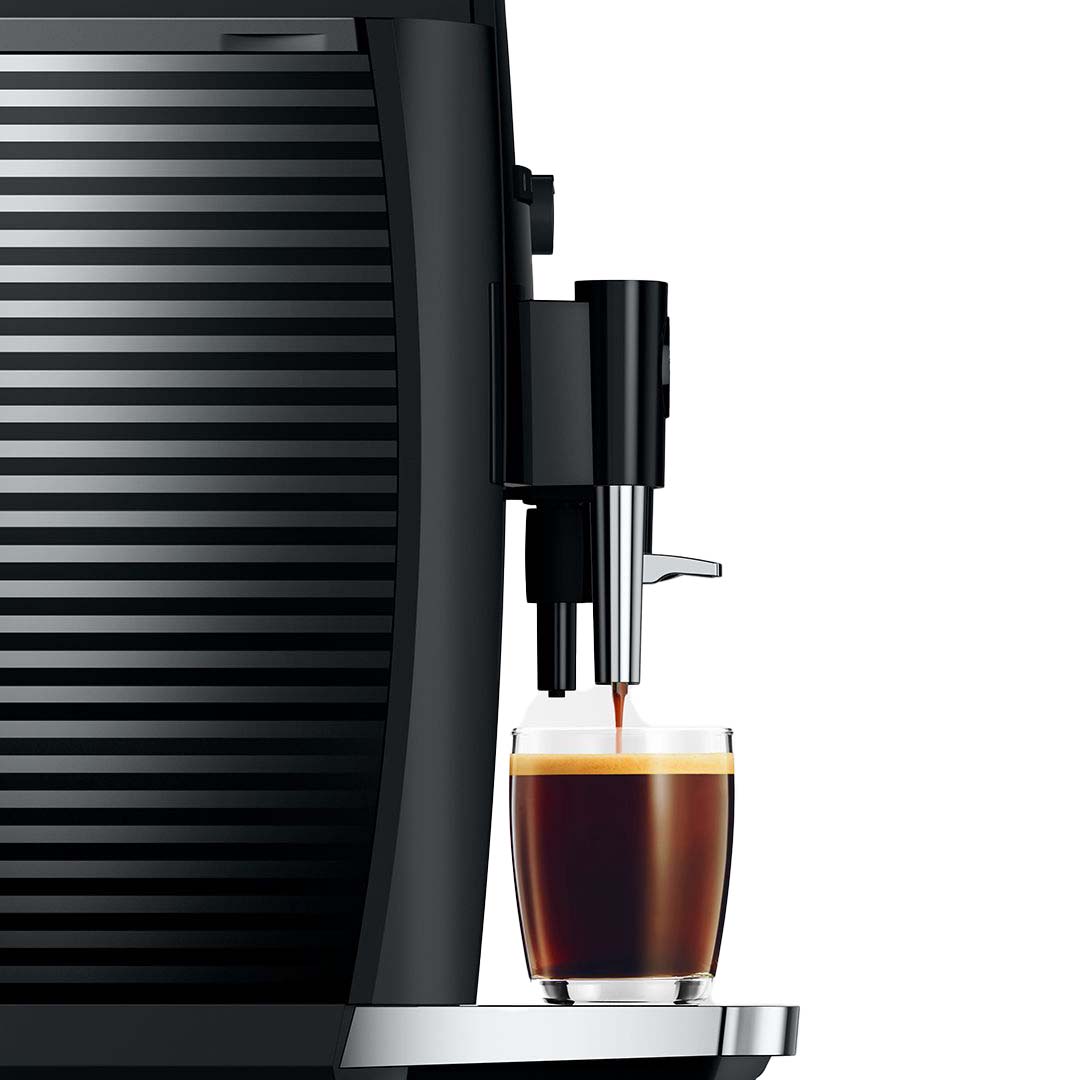
How do you know if your crema is crème-de-la-crème?  Well, first off, look at the shots you brew.  If there are pockets of black coffee visible through the brown layer, then the crema is too thin.  That's one easy way to tell if your crema is up to par.  But, looks can be deceiving.  So follow these two guidelines:

  • Your crema should be about 1/8" thick

  • Your crema should be able to support a teaspoon of sugar at once

If you aren't brewing into a glass, though, the first test is out. Also, you may have 1/8" of crema, yet the crema is still to stiff or rarefied.  So, try the sugar test.  Do it until you get it right and you enjoy the taste.

Remember, the stiffer the crema, the longer the crema's life, the slower the aromatics will seep into the drink.  Another three general rules of thumb are pretty helpful:

  • The darker the bean, the more rarefied the crema, but the lighter the bean the stiffer the crema.

  • The longer the bean has been roasted, the more rarefied the crema, but the less the bean has been roasted, the stiffer the crema.

  • The finer the grind, the stiffer the crema and the more bitter the drink, but the coarser the grind, the looser the crema and the less bitter the drink.

And there you have it... well, almost all of it. There is another essential feature of the espresso brewed coffee, one that also helps determine the composition of your crema; that is, pressure.  Just as espresso means "on the fly", it has another meaning, "pressed out".  You should be thinking of how the water is pressed out through the espresso grounds into your cup.

Espresso folks measure pressure in units called bars (from the Greek baros, meaning weight!)  For those of you familiar with P.S.I. units of measurement, one bar is roughly equivalent to 15 P.S.I. What you ought to remember is that in order to brew espresso properly, the water needs to go through the grounds at about 7 bar. 

And there you have it... really!  To sum up, although we use the term espresso loosely to describe bean color, roast, and grind size, an espresso drink is really a coffee drink that is brewed quickly at a particular pressure.  You know you've got one when you have a proper crema, and the way to get this is to have the right pressure, although bean color, roast, and grind size can alter the crema's consistency.  Now never can you refer to the baristo lingo as "all Greek to me"!